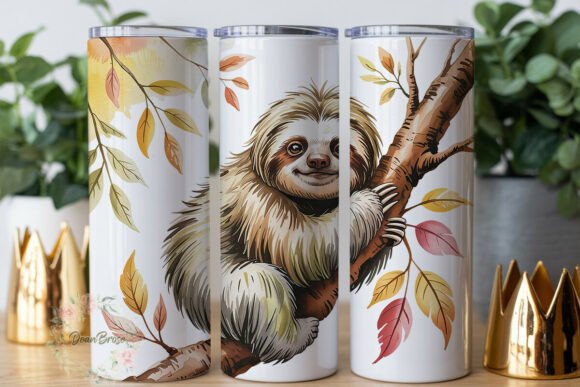
Watercolor Sloth Branch 20oz Tumbler Design Review
As a designer who spends more time staring at stitch maps than most people care to admit, I approach every new digital embroidery file with a mix of excitement and skepticism. When I first pulled up the Watercolor Sloth Branch 20oz Tumbler graphic, my initial reaction wasn't about how it would look on a cup, but rather how this specific aesthetic could translate into a tangible, stitched handmade product. While the source material is marketed under Tumbler Wraps and Graphics, the artistic merit of the design holds significant potential for those of us working in thread.
The mood of this piece is immediately calming. There is a softness to the watercolor style that suggests a gentle, organic feel, perfect for projects that need to evoke comfort rather than high-energy sportiness. For an embroidery designer, this presents both an opportunity and a challenge. The goal is to capture that fluid, painted look without losing definition in the stitching process. If you are considering using this imagery for a custom apparel line or a boutique collection, understanding how these visual elements convert to thread is crucial before you hoop your fabric.
Translating Watercolor Aesthetics to Stitch
The core appeal of the Watercolor Sloth Branch 20oz Tumbler lies in its relaxed composition. In a real-world scenario, imagine a customer requesting a personalized gift for a new mother or a nature lover who adores slow living. This design fits that brief perfectly. However, translating a PNG graphic intended for sublimation into a machine embroidery design requires careful planning. You aren't just printing ink; you are building texture with thread.
To achieve the watercolor effect, one would likely rely heavily on varied fill stitch patterns with lower density to allow the fabric to peek through, mimicking the transparency of paint. Alternatively, an applique design approach could work wonders here. By cutting fabric pieces that match the color blocks of the sloth and the branch, you can create a layered look that feels incredibly premium. This method often handles the "bleed" of watercolor art better than standard satin or fill stitches alone, especially when dealing with the subtle gradients found in the original graphic.
For a sweatshirt embroidery project, this design would shine. The loft of fleece or French terry provides a wonderful backdrop for the soft edges of the sloth. I can envision this centered on the chest of a oversized crewneck, perhaps paired with a simple script font for a name. The result would be a cozy, high-value item that feels bespoke. Similarly, for baby embroidery, the gentle lines and non-aggressive color palette make it an ideal candidate for onesies or nursery blankets, provided the stitch count is kept reasonable for delicate skin.
Practical Application in Small Business Contexts
For the Etsy seller or owner of a small shop product line, versatility is key. The Watercolor Sloth Branch 20oz Tumbler graphic offers a strong foundation for various design assets. Beyond clothing, consider its application on home goods. A tote bag design featuring this sloth could become a signature item for a local market. Canvas bags take well to dense stitching, allowing you to push the detail level slightly further than you might on stretchy knits.
Another excellent avenue is the embroidered patch. Creating a die-cut patch with this design allows customers to add the motif to existing gear, from backpacks to denim jackets. This expands your product range without requiring you to stock multiple garment sizes. Furthermore, for holiday embroidery collections, this neutral, nature-themed design serves as a great base. It isn't explicitly seasonal, which means it can be sold year-round, but it pairs beautifully with autumnal tones or spring pastels depending on your thread choices.
When presenting these items to clients, the perceived value increases significantly when the execution is clean. A well-digitized version of this image signals professionalism. It tells the buyer that you didn't just slap a logo on a shirt; you curated an experience. This attention to detail builds customer trust and encourages repeat business, which is the lifeblood of any craft business.
Navigating Technical Challenges and Fabric Choices
While the artistic potential is high, we must address the technical realities. The original files are high-resolution PNGs meant for printing, not pre-digitized stitch files. This means you, the designer, are responsible for the digitizing process or hiring a professional to convert the image. This is where caution is required.
First, consider stitch density. Watercolor effects often rely on subtle shifts in tone. If you pack too many stitches into these areas, you risk creating a stiff, plastic-like patch that loses the airy feel of the original art. Conversely, if the density is too low, the fabric may show through unevenly, ruining the illusion. Testing on scrap fabric is non-negotiable. You need to see how the threads interact with the specific material you intend to use.
Fabric texture plays a massive role here. On a smooth broadcloth, fine details will pop. On a textured towel or a waffle knit, some of the finer lines in the branch or the sloth's fur might get lost. For dark fabric, you will need to plan an underlay strategy carefully. A light-colored sloth on a navy hoodie requires a solid white underlay to prevent the dark background from muting the colors of the top stitches. Without this, your vibrant watercolor hues will look muddy.
Also, be mindful of hoop size limitations. While the graphic dimensions are generous at 9.3″ x 8.2″, not every machine can handle a hoop that large in one go. You may need to split the design for smaller hoops, which introduces alignment challenges. For curved surfaces like caps, this design might be too wide or detailed for the front panel unless simplified. In such cases, focusing just on the sloth's face or a smaller section of the branch might be a smarter move for a cap or hat project.
Final Thoughts on Commercial Viability
Ultimately, the Watercolor Sloth Branch 20oz Tumbler is a versatile visual asset that, when treated with respect and technical skill, can elevate a range of products. It moves beyond simple decoration to become a focal point of a personalized gift or a standout piece in a commercial embroidery catalog. The key lies in respecting the medium. Do not try to force the graphic to do something it isn't designed for; instead, adapt your stitching techniques to honor the watercolor style.
Before launching this as part of your inventory, ensure you have checked the licensing terms associated with the graphics. Since the purchase includes PNG files for tumbler wraps, verify if the license permits modification and resale as embroidered goods. Most designers appreciate clear communication regarding usage rights. Once cleared, run your tests. Check your thread colors against a physical chart, not just a screen, to ensure accuracy. Try a black-and-white mockup to verify contrast and readability.
In the hands of a skilled maker, this design has the power to create beautiful, lasting items. Whether it ends up on a kitchen towel, a pillow cover, or a limited-edition tee, the success of the finished product depends on the thoughtful bridge between digital art and physical thread. Take your time, test thoroughly, and let the charm of the sloth bring a touch of whimsy to your creations.