Review: Country Chicken Farmhouse Tumbler Wrap for Embroidery
As a designer who spends most of my day digitizing files and reviewing embroidery project assets for my small shop, I approach every new download with a critical eye. We all know the feeling: you see a cute graphic online, buy it instantly, and then realize halfway through stitching that the details are too fine for the fabric or the layout just doesn't work on a curved surface. Today, I am taking a close look at the Country Chicken Farmhouse Tumbler Wrap. While the product listing categorizes this under Tumbler Wraps and Graphics, my goal is to evaluate its potential beyond sublimation. Can this high-resolution image translate into a successful machine embroidery design for custom apparel and home decor? Let's dig into the practical realities of using this asset in a real-world craft business.
First Impressions: Mood and Visual Personality
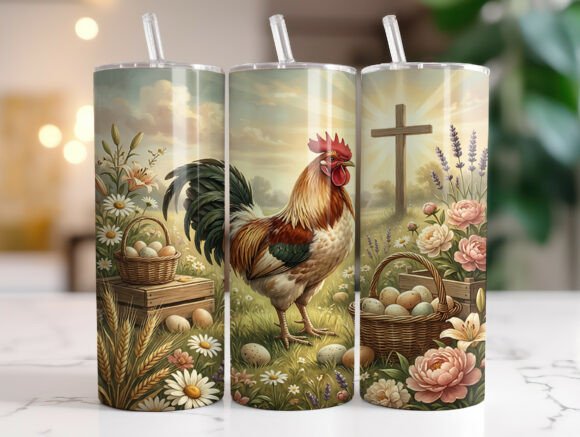
When I first opened the file, the immediate vibe was undeniably rustic and warm. The "farmhouse" aesthetic is often overdone, but this specific composition feels balanced. The layout features a country chicken motif that suggests a connection to homesteading, kitchen life, or cozy nursery themes. At 9.3″ x 8.2″ and 300 DPI, the resolution is sharp enough to see exactly where stitch lines would need to go if I were to digitize this manually or use it as a reference for an applique design.
The visual personality here is friendly and inviting. It isn't aggressive or overly complex, which is a huge plus for embroidery. In my experience, designs that rely on heavy shading or photorealistic gradients often fail when translated into thread because you simply cannot replicate every nuance without creating a stiff, cardboard-like patch. This graphic, however, relies on clear shapes and distinct outlines. For an Etsy seller looking to create a cohesive brand, this kind of imagery builds instant recognition. It speaks to customers who value handmade quality and simple living.
Real-World Application: From Screen to Stitch
To truly test the viability of this asset, I imagined a specific client scenario. A customer recently asked me for a set of matching kitchen towels and an apron for a housewarming gift. They wanted something that felt "country but modern." The Country Chicken Farmhouse Tumbler Wrap fits this brief perfectly. If I were to adapt this graphic for embroidery, I would likely simplify the interior details into solid fill stitch areas rather than trying to mimic the print shading.
For a tote bag design, this motif would shine. Canvas or heavy cotton duck provides the stability needed for larger designs. I can visualize this stitched in earthy tones—creams, browns, and slate blues—using a combination of satin stitch for the text elements (if any are added during digitization) and textured fill stitches for the chicken feathers. The result would be a durable handmade product that holds up to frequent washing, unlike a printed wrap that might fade or peel over time.
Another strong use case is sweatshirt embroidery. Placing this on the back of a oversized crewneck or the front left chest of a hoodie creates a boutique feel. Because the original file is a printable graphic, it serves as an excellent template. You aren't limited to the exact pixels; instead, you use the composition as a guide to create a custom digital embroidery file that moves with the fabric. This adds significant value to your small shop product line compared to simply selling a printed t-shirt.
Technical Considerations and Fabric Challenges
While the potential is high, we must be realistic about the limitations. Since the source material is a PNG intended for printing, there are no inherent stitch commands. If you attempt to use auto-digitizing software on this Graphics file, you risk creating a messy web of threads. My advice is to treat this as a reference image. Manually trace the key elements to ensure proper stitch density.
You need to be careful with textured fabrics. If you try to stitch this level of detail on a waffle-knit towel or a fuzzy fleece without proper stabilization, the design will sink or pucker. Always use a cut-away stabilizer for garments that will be washed frequently. For stretchy fabrics like t-shirts, a water-soluble topper is essential to prevent the stitches from disappearing into the knit loops.
Also, consider the hoop size. The original dimensions are roughly 9 inches wide. Not every home embroidery machine has a hoop that large. You may need to scale the design down for baby embroidery projects, such as onesies or bibs. When scaling down, watch out for tiny lettering or intricate feather details. What looks crisp at 9 inches might turn into a tangled mess at 3 inches. In those cases, simplify the design by removing small internal details and focusing on the silhouette.
Enhancing Brand Value and Customer Trust
Using a well-chosen motif like the Country Chicken Farmhouse Tumbler Wrap can significantly boost your commercial embroidery offerings. Customers trust handmade items more when the design looks intentional and professional. A sloppy, poorly digitized chicken looks like a hobbyist mistake; a clean, well-stitched version looks like a premium boutique item.
This design asset allows for versatility in your design assets library. You can offer it as a personalized gift by adding names in a complementary font, or use it for holiday embroidery collections around Easter or Thanksgiving. The consistency of using a strong visual theme across different products—pillow covers, tea towels, and patches—helps build brand loyalty. When a customer sees your work, they should immediately recognize the quality and style.
Practical Designer Notes for Success
Before you commit to stitching this on a client's expensive garment, follow these steps to ensure a perfect finished product:
- Test on Scrap Fabric: Never skip the test run. Stitch the design on the same type of fabric you plan to use for the final item to check for puckering or registration issues.
- Check Thread Contrast: Since this is a black-and-white or grayscale reference in many contexts, carefully select your thread colors. Ensure there is enough contrast between the design and the fabric background so the details pop.
- Review Stitch Density: If you are digitizing this yourself, avoid overly dense fills. Too many stitches can make the fabric stiff and uncomfortable to wear.
- Inspect Small Details: Zoom in on the original PNG. Identify areas that might be too small to stitch reliably and plan to simplify them.
- Mockup Verification: Create both color and black-and-white mockups to see how the design reads without the distraction of the original print colors.
- Confirm Licensing: The product description states this is an instant download digital file. Always verify the license terms regarding commercial use. Some graphics are for personal use only, while others allow you to sell finished physical items but not the digital file itself.
In conclusion, the Country Chicken Farmhouse Tumbler Wrap is a versatile starting point for creative entrepreneurs. While it arrives as a printable graphic, its true value lies in how you adapt it for thread. With careful digitization, appropriate fabric selection, and attention to technical details, this design can become a staple in your catalog of custom apparel and home goods. It bridges the gap between trendy digital art and timeless embroidered heirlooms, offering a practical solution for makers who want to stand out in a crowded market.