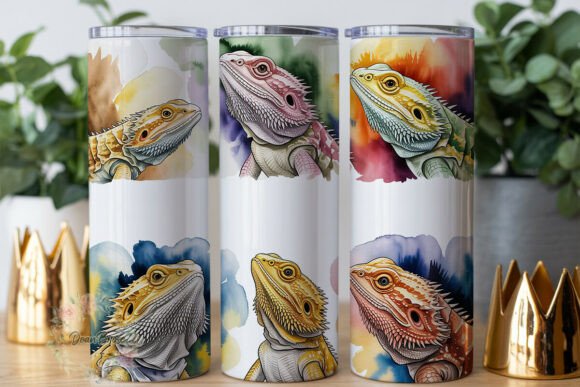
Watercolor Reptile 20oz Tumbler Wrap Review
As a designer who spends more time staring at stitch simulations than most people care to admit, I approach every new digital embroidery file with a mix of curiosity and skepticism. We've all been there: you download a stunning graphic, only to realize it translates poorly into thread, turning a sleek image into a muddy, over-stitched mess. Today, I'm taking a close look at the Watercolor Reptile 20oz Tumbler Wrap. While this asset is technically categorized under Tumbler Wraps and marketed as high-resolution Graphics for sublimation or printing, my interest lies in its potential adaptation for physical textile projects. Can a design meant for a curved tumbler surface hold up as a machine embroidery design on fabric? Let's dig into the practical realities.
First Impressions: Mood and Visual Personality
The moment you open the files included in this purchase—specifically the PNGs sized at 9.3″ x 8.2″ at 300 DPI—the first thing that strikes you is the fluidity. The "watercolor" aesthetic implies soft edges, bleeding colors, and an organic feel that can be notoriously difficult to replicate with thread. Unlike rigid vector art, this design relies on gradients and texture. For an embroidery project, this suggests a need for careful digitizing if you aren't using it purely as a printed transfer.
The theme itself—a reptile rendered in watercolor style—evokes a sense of modern boutique charm. It's not the aggressive, hyper-realistic lizard you might see on a skate brand logo; it's softer, more artistic. This makes it incredibly versatile for a handmade product line targeting customers who appreciate nature-inspired but gentle aesthetics. Whether you are envisioning a tote bag design for a local farmer's market or a unique sweatshirt embroidery piece for a boutique, the visual personality here screams "custom" rather than "mass-produced."
Real-World Application: From Screen to Stitch
Let's move from theory to a real-life scenario. Imagine I have a client who runs a small reptile rescue. They need a series of custom apparel items for their upcoming fundraiser. They want something that looks professional but retains an artistic flair. The Watercolor Reptile 20oz Tumbler Wrap could serve as the perfect base reference for creating a custom embroidered patch or a direct-to-garment embroidery setup.
However, because the source files are PNGs intended for tumbler wrapping, they are not ready-to-stitch embroidery files out of the box. You cannot simply load a PNG into your machine. This is where the designer's eye comes in. To use this effectively, one would need to digitize the image, converting those watercolor washes into a combination of fill stitch for the body, satin stitch for defining outlines, and perhaps running stitch for subtle textural details. The high resolution (300 DPI) is a massive plus here; it means when you trace the image in your digitizing software, the edges are crisp, allowing for precise path creation.
If applied to a heavy cotton tote or a structured cap, the result could be stunning. The organic shapes of the reptile allow for creative thread blending. Instead of standard solid blocks of color, a skilled digitizer could use variegated threads to mimic the watercolor effect, creating a finished product that truly stands out at a craft fair. For Etsy sellers looking to differentiate their small shop product listings, this approach adds significant value compared to standard, flat logos.
Navigating Fabric and Texture Challenges
While the potential is high, we must address the limitations. Watercolor styles rely on subtle transitions that thread sometimes struggles to capture without becoming too dense. If you attempt to stitch this on a thin fabric like a lightweight tee or a silky scarf, the stitch density required to capture the detail might cause puckering or stiffness. In these cases, I would strongly advise using a cut-away stabilizer rather than tear-away to support the weight of the design.
Furthermore, consider the fabric texture. On a Terry cloth towel or a fuzzy fleece blanket, fine details often get lost. The Watercolor Reptile 20oz Tumbler Wrap features intricate scales and color shifts that might merge together on high-pile fabrics. For baby embroidery projects, where softness is paramount, you might need to simplify the design, reducing the stitch count and focusing on the silhouette rather than the internal watercolor details. Similarly, if you are working on a curved surface like a cap, the layout needs adjustment; the 9.3″ width is quite large for a standard front panel, so scaling down while maintaining clarity is crucial.
Commercial Viability and Brand Consistency
For those running a craft business, consistency is key. Using a high-quality base graphic like this ensures that whether you are selling a sublimated tumbler or an embroidered hoodie, the branding remains cohesive. The fact that the download includes versions for both straight and tapered tumblers shows attention to detail, which translates well when adapting the art for other mediums. It suggests the original creator understands dimensional constraints, a mindset that benefits embroidery designers too.
When evaluating this for commercial embroidery use, think about the end user. A customer buying a personalized gift wants something that feels special. A watercolor-style reptile on a pillow cover or kitchen towel feels curated and thoughtful. It elevates the perceived value of the item. However, always verify the licensing terms. Just because a file is high resolution doesn't automatically grant unlimited commercial rights for derivative works like digitized embroidery. Always confirm whether the license covers selling physical goods made from adapted versions of the graphic.
Practical Designer Notes for Execution
Before committing this design to a client's order, follow these practical steps:
- Test on Scrap First: Never skip the test run. Stitch the digitized version on the exact fabric you plan to use for the final embroidery project.
- Check Thread Contrast: Watercolor effects rely on tone. Ensure your thread colors have enough contrast to distinguish the reptile's features without looking harsh.
- Review Stitch Density: If the design feels too stiff after stitching, reduce the fill density in your software to improve drape, especially for wearable items.
- Mockup Verification: Create black and white mockups to ensure the design holds its shape even without color. This helps identify areas that might blur together.
- Hoop Size Confirmation: At nearly 9 inches wide, ensure your machine's maximum hoop size can accommodate the design, or be prepared to split the design if necessary (though splitting is not ideal for this continuous art style).
- Light vs. Dark Backgrounds: Test how the design looks on dark fabric. You may need to add an underlay or a backing layer to prevent the fabric color from muting the watercolor vibrancy.
In conclusion, the Watercolor Reptile 20oz Tumbler Wrap is a robust starting point for creative entrepreneurs. While it arrives as a graphic for hard goods, its artistic merit makes it a prime candidate for adaptation into high-end textile applications. With the right digitizing strategy and an understanding of fabric limitations, this design can transform simple blanks into premium design assets that resonate with buyers looking for something unique and handcrafted.