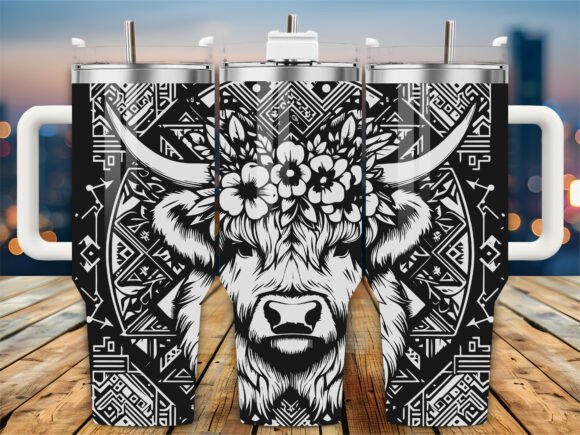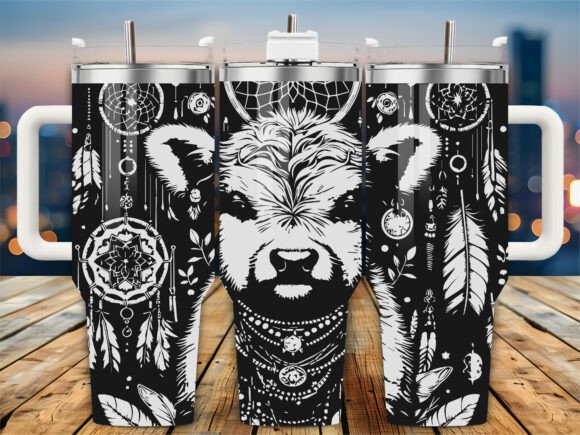
Tropical Highland Cow 40oz Tumbler Wrap Review
As a designer who spends more time staring at stitch maps than most people care to admit, I approach every new digital embroidery file with a mix of curiosity and skepticism. We have all downloaded a "perfect" design only to find it turns into a bird's nest of thread breaks and puckering once it hits the machine. So, when I came across the Tropical Highland Cow 40oz Tumbler Wrap, my first instinct wasn't to rush to the hoop. Instead, I wanted to dissect how this graphic translates from a laser engraving concept to a tangible machine embroidery design suitable for real-world Crafts and Graphics applications.
First Impressions: Mood and Visual Personality
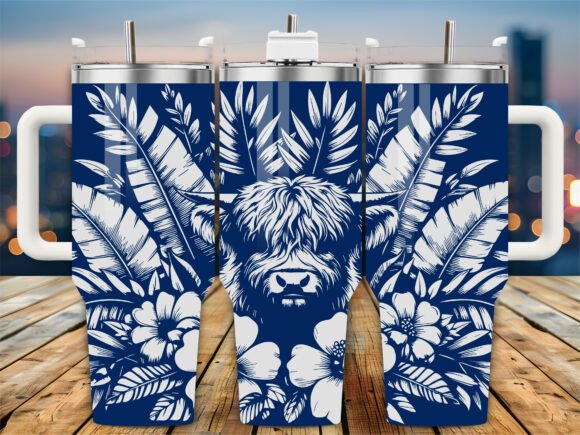
The immediate appeal of the Tropical Highland Cow 40oz Tumbler Wrap lies in its whimsical fusion of rugged animal character and vibrant tropical flora. Visually, it creates a mood that is both playful and sophisticated—a combination that sells incredibly well in today's boutique market. The layout suggests a wrap-around composition, which implies a need for careful placement if you are adapting it for flat surfaces. For an embroidery project, the density of the tropical leaves paired with the textured fur of the highland cow presents an interesting challenge. It feels less like a standard clipart image and more like a curated piece of art ready to be translated into thread.
When evaluating the thread colors implied by the design, I see a rich palette opportunity. The contrast between the earthy tones of the cow and the bright greens or pinks of the tropical elements offers a chance to play with satin stitch borders against dense fill stitch areas. However, the success of this translation depends entirely on how the original vector lines are converted into stitch paths. A design meant for laser engraving relies on continuous lines, whereas embroidery requires discrete jumps and trims. If the conversion is handled well, the result will be a stunning handmade product that stands out on a shelf.
Real-World Application: From Concept to Custom Apparel
Let's move beyond theory and talk about where this design actually lives. Imagine a client comes into your small shop requesting a custom sweatshirt embroidery for a summer-themed family reunion. They want something unique, not just another monogram. This is where the Tropical Highland Cow 40oz Tumbler Wrap shines as a source of inspiration. While the original intent is a tumbler wrap, the central motif is perfect for the back of a oversized tee or the front pocket of a denim jacket.
I recently simulated this kind of project mentally, picturing the design scaled down for a tote bag design. The intricate details of the cow's shaggy coat would require a high stitch count to maintain definition. On a canvas tote, this could look magnificent, provided the stitch density isn't so high that it causes the fabric to pucker. For a personalized gift like a baby onesie, however, caution is key. The texture of a highland cow rendered in thread can be quite raised; on delicate baby skin or thin knits, this might be uncomfortable. In such cases, simplifying the fill or using an applique design technique with actual fabric pieces might yield a softer, more wearable finished product.
For Etsy sellers and creative entrepreneurs, the versatility of this graphic is a major asset. It fits seamlessly into niches ranging from farmhouse decor to tropical vacation gear. You could easily adapt the elements for an embroidered patch, creating a collectible item that customers can iron onto hats or bags. The visual recognition factor is high; the silhouette of the highland cow is iconic, and adding the tropical twist makes it feel fresh and current, boosting buyer engagement.
Technical Considerations and Fabric Challenges
Here is the part where experience matters most. Taking a design labeled for a 40oz tumbler and applying it to textiles requires a critical eye for scale and surface. Tumblers are rigid; fabric moves. If you attempt to stitch this on a curved surface like a cap, the wrap-around nature of the original design becomes problematic. You would need to isolate specific elements—perhaps just the cow's face or a cluster of leaves—to fit within a standard cap hoop size. Trying to force a full wrap onto a structured hat will likely result in registration issues and distorted proportions.
Fabric texture is another variable. On a smooth, tightly woven cotton, the fine details of the tropical leaves will pop. However, on a textured fleece or a looped towel, those tiny running stitch outlines might get lost. I always advise testing the design on scrap fabric that matches your final material. If you are working with dark fabric, ensure the design includes underlay stitches or plan to use a lighter thread palette to maintain contrast. Without proper underlay, the fabric texture can show through the fill, making the colors look muddy.
Furthermore, consider the washing instructions for the end user. A dense embroidery project on a kitchen towel or apron needs to withstand frequent laundering. If the stitch density is too aggressive, the fabric may tear around the edges of the design over time. It is crucial to review the file settings—if you have access to the editing software—to ensure there are no overly long jumps or unnecessary trims that could compromise durability.
Enhancing Brand Value and Professionalism
In the world of commercial embroidery, consistency is trust. Using a high-quality base design like the Tropical Highland Cow 40oz Tumbler Wrap elevates the perceived value of your small shop product. When a customer receives an item where the stitching is crisp, the colors are vibrant, and the placement is precise, they associate that quality with your brand. This design, with its detailed aesthetic, signals that you put effort into your selections. It moves away from generic, overused clipart and toward curated design assets that tell a story.
For those creating printable mockups to sell digital previews or to market their physical goods, this graphic offers excellent visual potential. The interplay of light and shadow in the original engraving concept can be mimicked with thread shading techniques, creating a quasi-3D effect that photographs beautifully for social media. High-quality images of such detailed work drive clicks and conversions, helping you stand out in a saturated marketplace.
Practical Notes for the Serious Maker
Before you commit to stitching this on a client's expensive garment, here are a few non-negotiable steps I recommend:
- Test on Scraps: Always run a sample on the exact fabric type you intend to use. Check for puckering and thread breaks.
- Check Stabilizer: Given the likely density of the cow's fur and leaf details, a cut-away stabilizer is probably safer than tear-away, especially for stretchy fabrics.
- Verify Licensing: The product description mentions it is "Perfect for Small business," but always confirm the specific license terms. Can you sell the stitched item? Can you resell the digitized file? Clarity here protects your craft business.
- Inspect Small Details: Zoom in on the digital file. Are the tiny leaf veins too close together? If so, they might merge when stitched. You may need to simplify these areas manually.
- Contrast Check: View the design in black and white. If the values are too similar, the design will lack definition once stitched.
Ultimately, the Tropical Highland Cow 40oz Tumbler Wrap is a compelling starting point for a variety of creative ventures. Whether you are making a holiday embroidery gift, stocking up for a craft fair, or expanding your catalog of custom apparel, this design offers a blend of charm and complexity. With the right technical adjustments and a keen eye for material compatibility, it can transform from a simple graphic into a cherished, tactile piece of art. Just remember: the file is a blueprint, but your expertise as a maker is what brings it to life.