Review: Recycling Icon SVG Collection for Eco Embroidery
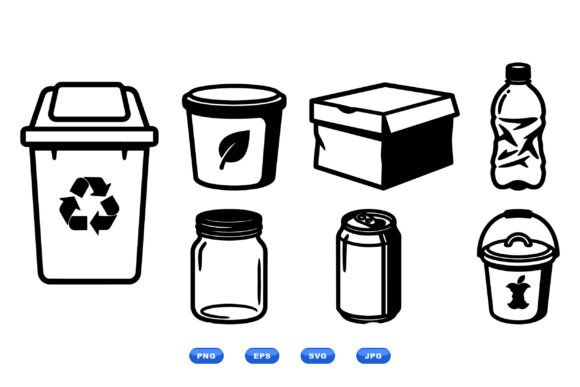
As a designer who spends more time staring at stitch maps than most people care to admit, I am always on the lookout for graphics that translate well from screen to fabric. When I first opened the Recycling Icon SVG Collection, my immediate reaction was one of relief. In a market flooded with overly complex vectors that turn into thread nests under high-speed machines, this set offers a refreshing dose of clarity. It is a bold flat vector set displaying recycling containers including bin cup box bottle jar can and compost bucket for environmental graphic projects eco friendly. For those of us in the Crafts and Graphics space, finding assets that respect the limitations of embroidery while maintaining modern aesthetics is half the battle won.
First Impressions: Clean Lines and Modern Utility
The visual personality of this collection is undeniably functional yet stylish. The shapes are distinct, avoiding the fuzzy edges that often plague small-scale digitizing. When evaluating an embroidery file for real project use, I look for how the lines interact with potential stitch types. These icons naturally lend themselves to a combination of satin stitch borders and solid fill stitch areas. The "flat" nature mentioned in the description suggests minimal shading, which is excellent for maintaining readability on textured fabrics. There is no unnecessary detail that would require microscopic precision; instead, the design relies on strong silhouettes. This makes the Recycling Icon SVG Collection ideal for projects where the message needs to be understood instantly, such as branding for a zero-waste shop or a community cleanup initiative.
Real-World Application: The Eco-Tote Scenario
To truly test the viability of these assets, I imagined a specific client request: a local boutique needed a run of custom tote bags to promote their new "plastic-free" aisle. They wanted something that looked professional but not corporate. This is where the Recycling Icon SVG Collection shines. I selected the bin and bottle icons to create a clustered composition on the lower corner of a heavy canvas tote.
In this scenario, the boldness of the vector ensures that the stitch density can be kept moderate without losing definition. If you were to attempt this with a highly detailed raster image, you would risk puckering the fabric or creating a stiff, cardboard-like hand feel. With these clean vectors, the resulting finished product remains soft and flexible. The customer reaction to such a handmade product is usually positive because it signals attention to detail. It elevates a simple grocery bag into a statement piece. Furthermore, because the icons are separate elements, they offer flexibility for an Etsy seller or small shop product creator to mix and match based on the specific sustainability angle of their brand.
Versatility Across Apparel and Home Goods
Beyond tote bags, this collection is remarkably versatile for custom apparel. Imagine a sweatshirt embroidery project for a university environmental club. Placing a single compost bucket icon on the left chest area creates a subtle yet meaningful accent. The simplicity of the design works equally well on baby embroidery projects, such as a onesie celebrating Earth Day, provided the scale is adjusted correctly. For home decor, these icons could be stitched onto pillow covers or tea towels, adding a touch of conscious living to the kitchen.
For commercial embroidery professionals, the value lies in consistency. Whether you are producing fifty aprons for a cafe or a batch of caps for a recycling plant, having a cohesive set of design assets ensures brand uniformity. The inclusion of various containers—jar, can, box—means you aren't limited to a single generic symbol. You can tailor the graphic to the specific waste stream your client is highlighting, adding a layer of customization that increases perceived value.
Technical Considerations and Fabric Challenges
While the design is robust, practical application requires caution. Not every surface is created equal. When working with stretchy fabrics like jersey knits for t-shirts, the rigid nature of a filled icon can restrict movement if the stabilizer isn't chosen correctly. I strongly advise using a cut-away stabilizer for these designs to prevent distortion over time, especially since items like tote bags and workwear undergo frequent washing.
Curved surfaces present another challenge. If you plan to use these icons on a cap, be mindful of the hoop size and the curvature of the front panel. The sharp corners on the "box" or "can" icons might bridge or pull if the fabric tension isn't perfect. Additionally, on dark fabrics, you must ensure your thread colors provide sufficient contrast. A light green icon on a navy background works, but a dark green on black will vanish. Always run a test on scrap fabric that matches your final material. This is non-negotiable for maintaining professionalism.
Small details also demand scrutiny. While the vectors are bold, shrinking them down for a tiny embroidered patch or a baby sock might cause the thinner lines of the "bottle" neck or the "jar" rim to merge. In such cases, you may need to manually adjust the digitizing or simplify the shape further before stitching. Remember, what looks crisp on a monitor at 100% zoom can become a blob at 2 inches wide on a garment.
Enhancing Brand Value and Customer Trust
Using high-quality graphics like the Recycling Icon SVG Collection directly impacts buyer engagement. In the world of online selling, your printable mockup is often the first interaction a customer has with your item. Clean, recognizable icons make for compelling listing photos. They communicate competence. When a customer sees a well-executed recycling symbol on a product, it reinforces the eco-friendly narrative of the item itself. It builds trust. Conversely, a poorly stitched or pixelated graphic can undermine the entire message of sustainability.
For creative entrepreneurs, these icons serve as more than just decoration; they are communication tools. They help tell the story of the personalized gift or the holiday embroidery project you are creating. Whether it is a wedding favor for an eco-conscious couple or a corporate gift for a green tech startup, the right icon adds a layer of thoughtfulness that generic text cannot achieve.
Final Designer Notes and Best Practices
Before diving into production, there are a few housekeeping items to address. Since the downloadable package includes SVG files, you will likely need to digitize them into a machine-readable format unless you are using software that converts vectors directly to stitches. During this process, pay close attention to the underlay. A proper underlay structure is crucial for keeping those flat fills smooth and preventing the fabric from showing through.
Always check the licensing terms associated with the Recycling Icon SVG Collection. While many such collections allow for commercial use in finished physical goods, restrictions may apply to reselling the digital files themselves. Confirm this before listing items on Etsy or other marketplaces. Additionally, test your design in both color and monochrome. Sometimes, a design relies too heavily on color differentiation, and seeing how it holds up in a single thread color can reveal weak points in the layout.
In conclusion, this collection is a solid addition to any designer's library. It bridges the gap between digital graphic design and tactile textile art. By respecting the medium of embroidery and choosing the right materials, you can turn these simple vectors into powerful, sustainable statements. Whether you are a hobbyist making gifts for friends or a business owner scaling up production, the Recycling Icon SVG Collection offers the reliability and aesthetic appeal needed to create standout products.